BIOS and POST
The BIOS is a piece of software that is kept on a non-volatile ROM chip (this is known as firmware). and is in charge of POST (Power On Self Test). In order to assist in the diagnosis of any problems connected to other firmware components on the motherboard, such as video card failure, hard drive corruption, etc., this is therefore executed first when the system is turned on.
Firmware comes in a variety of forms, including ROM, EPROM, and Flash memory. Firmware was originally hard-coded code that was kept in non-volatile memory storage. Because firmware is non-volatile, configurations may be preserved and kept even when the computer system is shut down, which is a crucial feature.
It is essentially software for hardware, to put it briefly. In order to improve functionality between the software, operating system, and computer, specific bootable firmware instructions will be encoded into the hardware of other motherboard components, such as optical drives and memory cards.
POST - Power On Self Test
Power on self test (POST) is a diagnostic setting that is programmed onto the BIOS chip. Because POST was initially non-erasable, there will never be problems when launching POST barring any modifications to the BIOS chip itself.
POST signals "beeps" to identify hardware problems with the system unit. Although the beeps can vary between system makers, they are generally all configured roughly the same way, for instance. When the computer boots, one beep signifies BIOS/ROM corruption or failure, while four beeps could mean RAM failure.
CMOS Battery
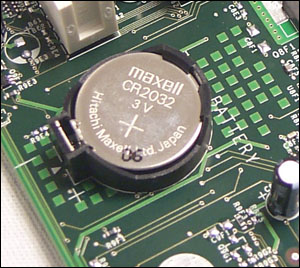
The CMOS battery is a non-volatile RAM memory chip that maintains data after the system is turned off, as described in the motherboard section. In older systems, it stores a small portion of the BIOS instructions, preventing BIOS from resetting its configurations upon powering on. In both vintage and contemporary systems, the date and time are also stored in the CMOS battery.
POST - Power On Self Test
Power on self test (POST) is a diagnostic setting that is programmed onto the BIOS chip. Because POST was initially non-erasable, there will never be problems when launching POST barring any modifications to the BIOS chip itself.
POST signals "beeps" to identify hardware problems with the system unit. Although the beeps can vary between system makers, they are generally all configured roughly the same way, for instance. When the computer boots, one beep signifies BIOS/ROM corruption or failure, while four beeps could mean RAM failure.
CMOS Battery
The CMOS battery is a non-volatile RAM memory chip that maintains data after the system is turned off, as described in the motherboard section. In older systems, it stores a small portion of the BIOS instructions, preventing BIOS from resetting its configurations upon powering on. In both vintage and contemporary systems, the date and time are also stored in the CMOS battery.

